
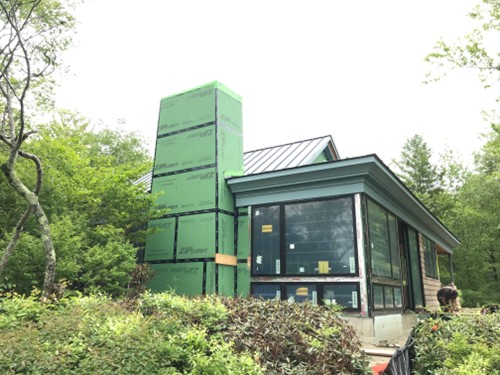
DEFLECTION OVER LUXURY GLAZING FIXTURES
By Brian Ki, P.E.
To seamlessly blend indoor and outdoor spaces, architects often specify luxurious glazing fixtures. These include large windows, often floor-to-ceiling heights that have little- to no-mullions. Some also being operatable, such as large sliding or folding doors. Specialty manufacturers, such as Nanawall, Panda, or Schuco, started the trend, and more well-known brands, such as Pella, Marvin, or Anderson, have caught on with their own.
Because of their large size and operability, the manufacturer often defines vertical deflection tolerances for headers or lintels framed above. The tolerances are typically very small and often control the structural design of the members. We’ve seen most specify one or a combination of the following scenarios:
LENGTH RATIO
Deflection results are compared to a ratio of the member’s length, L. Per Table 1604.3 in the IBC, typical floor and roof deflections are frequently limited to L/180, L/240 or L/360. For an improved system, we may even recommend L/480.
Common manufacturer specifications require L/720, and sometimes, L/1000+; more than double that of the IBC minimum requirements.
Comparing the deflection criteria using a 10ft long beam, you can see why the deflection starts to drive the member’s design.
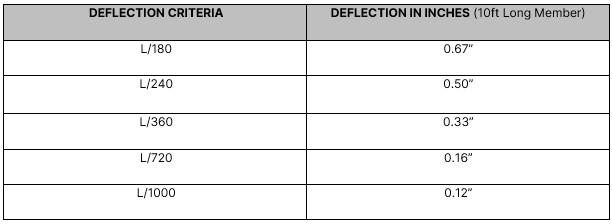
Because the limit is set as a ratio, longer beams are allowed to deflect more using this criterion. A 30ft long beam with a L/360 deflection limit, can still pass modern code requirements with 1” of deflection. It is unlikely any window or door can withstand that much deflection, let alone these fancier ones. Rather, manufacturers will pair the length ratio with a set value, whichever is less.
SET VALUE
The easiest to understand, “the vertical deflection shall be limited to no more than XX inches.”
The most popular value seems to hover around 1/4”, but we’ve seen this tolerance set as small as 1/8”.
Let’s compare again, now using a 20ft long beam with a 10,000lb point load in the middle.
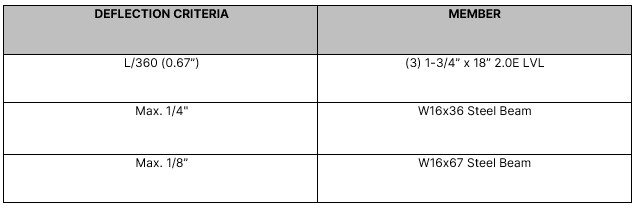
When set to a Length Ratio, less expensive LVL’s may be used. If stiffer requirements are necessary, steel is now introduced, and when halved again, the weight of the beam is more than doubled.
ZERO DEFLECTION
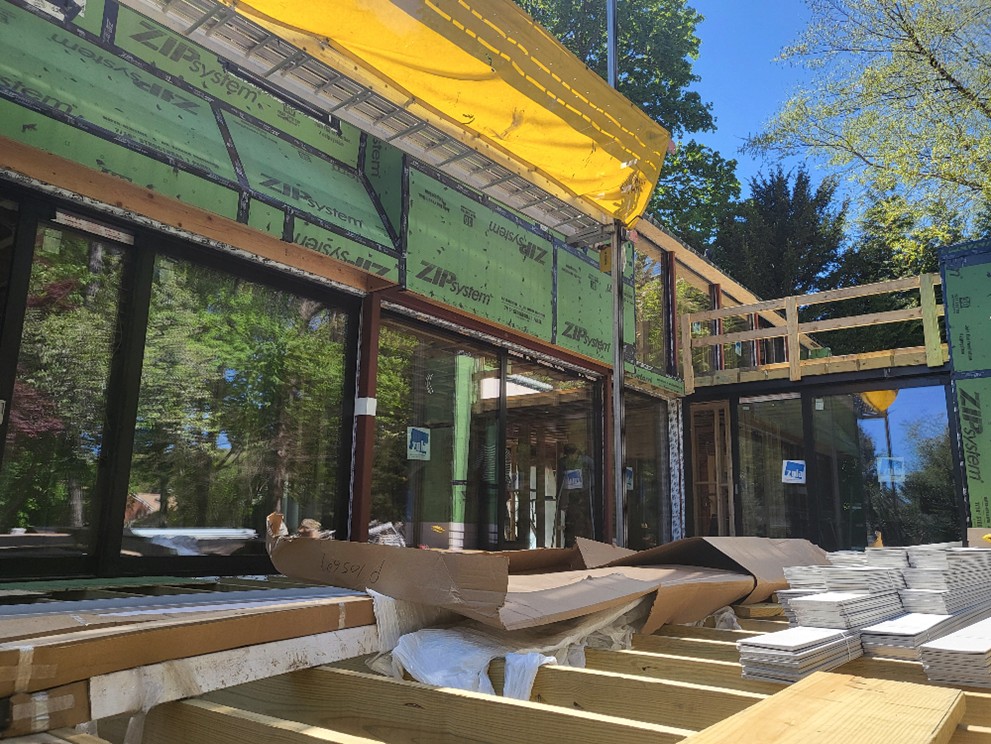
The hardest set value we’ve had to deal with is when the manufacturer specifies “zero” deflection, which is physically impossible. We’ve had manufacturer reps admit they understand the conflict to this requirement, but they must relay the “corporate” answer.
The dead load of a beam itself will cause the member to deflect at some capacity even without additional dead or live loads added to them. When “zero” is the set value, we suggest coming to the table with architect, contractor, and owner knowing this is an unreasonable ask, and we, as in the entire design team, must all agree on setting the limit to a certain criterion.
SOLUTIONS
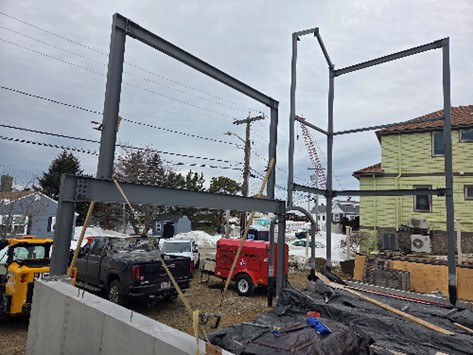
When it comes to luxurious glazing fixtures and their small tolerances for deflection, most often stronger members are used. This could be deeper members or even stronger material, such as steel. If modifying the architecture is an option, shortening the member’s span will significantly help.
In applications, where the beam sizes and materials are still unreasonable, engineers must be creative. This might involve creating another load bearing system over the feature window/door header to mitigate loads around that member. This might also include flipping joists, beams, or roof framing members, and supporting them elsewhere and/or in another direction.
Alternatively, a custom flexible connected system could be designed. For example, a two-tiered frame could be designed in such a way that a gap is left between the members. Likely slotted connectors will be necessary to keep components intact but maintain vertical movement. Installation of such a system would need to be heavily communicated and understood by those constructing it. As soon as a traditional rigid connector is introduced, the system could no longer be appropriate for its use.
Brian W Ki, P.E.
Structural Senior Engineer
More Articles From...
| This Category | Residential Engineering, Structural Design, Structural Engineering |
| This Author | Brian Ki, P.E. |